From Operations to Autonomy: AI-Powered Transformation of Supply Chains Through IEEE Research
By Juliette Mackenzie·2026-09-09

Bringing research into operational practice
Supply chains are no longer just about moving goods from point A to point B. They are becoming intelligent, adaptive systems that require new digital infrastructure, decision science, and algorithmic control. As a Supply Chain Specialist, Hari Jothiswaran has focused on applying scientific research to real business problems, translating academic methods into practical tools for automation, inventory optimization, resilience, and business process transformation.
AI-powered support and optimization
One thread across Hari’s IEEE publications is the use of artificial intelligence to improve day-to-day operations. His work on AI-powered helpdesk automation uses contextual vector retrieval to speed incident resolution and raise support efficiency on supply chain platforms. Other studies apply metaheuristic algorithms and stochastic modeling to inventory optimization and agricultural supply chain efficiency, helping organizations improve service levels while controlling costs.

Reinforcement learning and autonomous resource orchestration
Another significant contribution centers on Deep Reinforcement Learning for autonomous resource orchestration. These studies show how reinforcement learning agents can dynamically optimize allocation and distribution in complex supply networks, supporting enterprise-level optimization under changing conditions. This approach moves planning from static rules to continuous learning, enabling systems to adapt to demand shifts, capacity limits, and operational disruptions.

Generative AI, Agentic Systems, and large language models
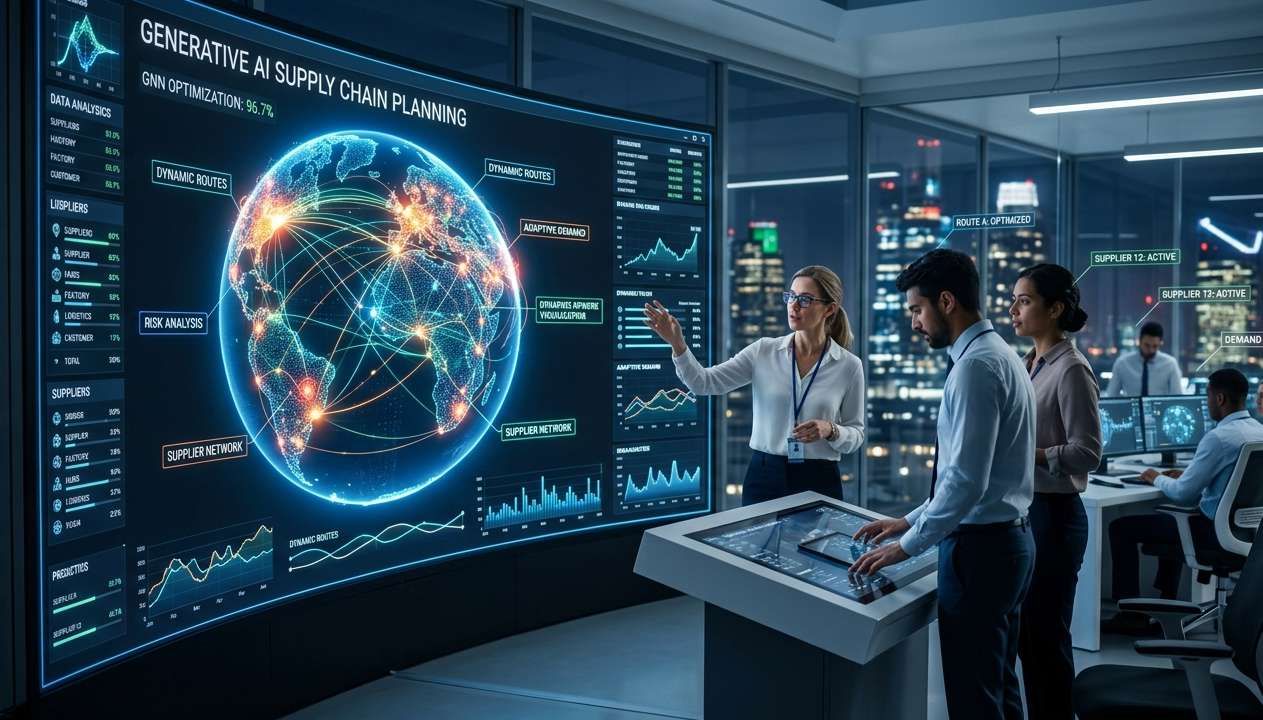
Recent work emphasizes Generative AI and Agentic AI for planning and process automation. In Graph-Based Generative Policies for Supply Chain Optimization Under Uncertainty, Hari combines graph neural networks, reinforcement learning, and probabilistic simulations to improve planning when forecasts are unreliable. His research on Agentic Transformation in Business Process Management examines governance, human-agent collaboration, and responsible adoption of agentic systems. Complementing these is analysis of Large Language Models in Business Process Management, which explores how advanced linguistic intelligence can assist process analysis and enterprise decision making.
Resilience, risk mitigation, and digital infrastructure
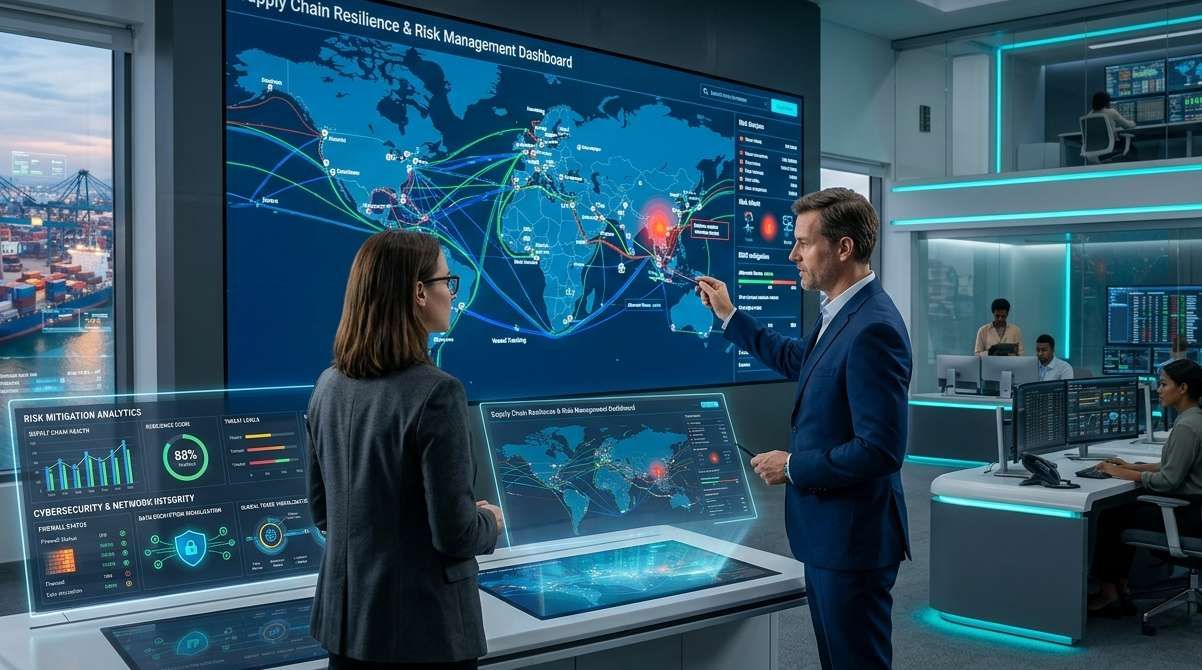
Resilience is a recurring theme across the research portfolio. Hari’s work investigates how digital infrastructure influences supply chain robustness and how risk mitigation strategies strengthen operational continuity. Those findings offer practical guidance for organizations that must maintain service levels in the face of supplier failures, demand shocks, or logistical disruptions. The research connects infrastructure design with actionable risk controls to reduce exposure and improve recovery times.

Practical business impact and the path ahead
Across eight IEEE publications, the common thread is practical impact: research that informs real systems rather than remaining theoretical. From helpdesk automation and inventory models to agentic processes and generative planning, these studies offer frameworks and algorithms that enterprises can integrate to improve operational performance, cut costs, and increase responsiveness.
The future pointed to by this body of work is one in which supply chains are intelligent and increasingly autonomous. Organizations that adopt AI-powered planning, reinforcement learning for operational control, and agentic process governance can expect better inventory optimization, faster incident resolution, and stronger resilience to disruption. By aligning digital infrastructure, decision models, and governance, enterprises can transform operations into adaptive systems capable of meeting rapid market changes and evolving customer expectations.
Hari’s long-term vision centers on ongoing research and industry collaboration to advance the next generation of digital supply chain innovation. The combination of IEEE-published research, applied experimentation, and a focus on measurable business outcomes maps a clear route for companies that want to move from reactive operations to proactive, autonomous supply networks.